
Your business has big plans. Your technology? Well, it might have other ideas! Imagine this. You’re ready to grow, attract more customers, and improve operations. But your systems keep crashing. Your teams use outdated tools. And every new software purchase creates another headache.
Frustrating, right?
Here’s the thing. Technology should push your business forward, not hold it back! That’s where IT strategy consulting makes a difference. It connects your technology investments with your actual business goals. Instead of buying tools and hoping for results, you build a clear plan for success. But how does that work? And why should businesses care? Let’s explore how smarter IT decisions can turn everyday challenges into exciting opportunities.
First Things First: What Is IT and Business Alignment?
Let’s keep this simple.
What is business IT alignment? It’s the process of making sure your technology supports what your business wants to achieve. Think of your business as a car. Your goals set the destination. Your technology powers the engine. And your strategy keeps everything moving in the right direction. Without coordination, even a powerful engine won’t get you where you want to go!
Successful IT and business alignment connects three important elements:
- People: Employees understand how technology helps them work.
- Processes: Daily operations become simpler and more efficient.
- Technology: Digital tools support measurable business results.
This connection creates stronger business and technology alignment.
And the best part? You don’t need to replace every system to make meaningful progress. Sometimes, you simply need a better plan.
Why Does IT Strategy Consulting Matter More Than Ever?

Credit: gmac.com
Let’s ask an important question.
Are you investing in technology because your business needs it? Or because everyone else seems to be using it? There’s a big difference! Companies often rush toward artificial intelligence, cloud platforms, and automation. But without clear objectives, these investments can become expensive experiments. Effective IT strategy consulting services help businesses avoid that trap.
Here’s what strategic alignment can improve:
a) Less Waste, More Value
Stop spending money on tools your team barely uses. Focus your budget on solutions that solve real problems.
b) Faster Decisions, Fewer Delays
Connected systems give leaders better information. Teams can respond faster and avoid unnecessary confusion.
c) Smarter Growth, Stronger Results
Your technology becomes ready to support expansion, new customers, and changing business needs.
d) Better Employee Experiences
When tools work together, employees spend less time fixing problems and more time doing meaningful work.
That’s the real goal of business technology alignment: making every technology decision count!
6 Powerful Ways IT Strategy Consulting Connects Technology With Business Goals
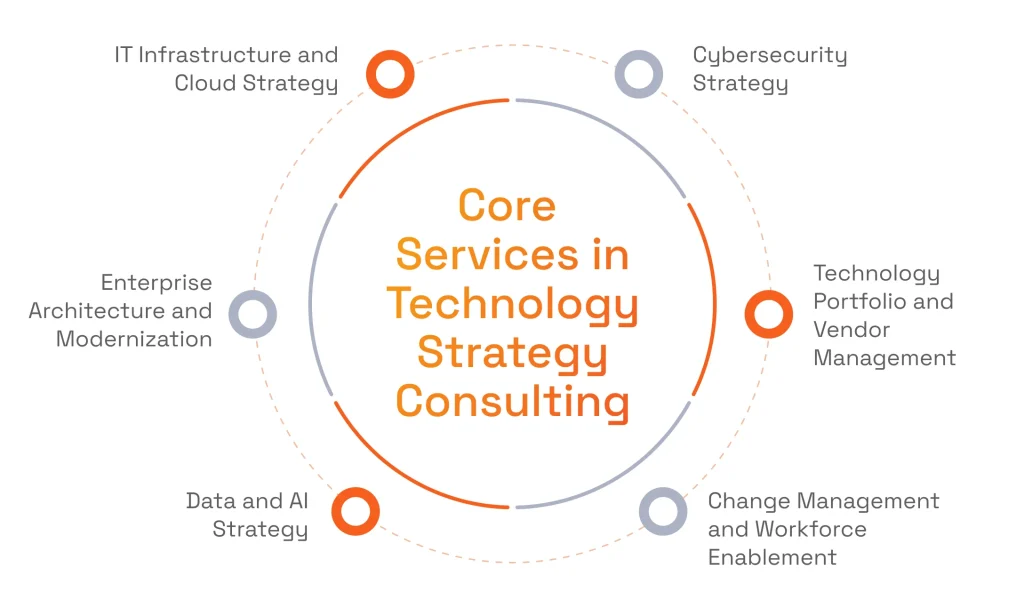
Credit: spd.tech
Ready to turn your IT investments into actual business progress?
Here’s how the process works.
1. Start With Your Business Goals, Not Your Software Wishlist
Picture this.
You walk into a meeting and announce, “We need AI!” Sounds exciting. But why? Will it reduce costs? Improve customer service? Save employee time? If nobody can answer those questions, you’re not building a strategy. You’re following a trend. A skilled IT strategy consultant starts with your business challenges.
They ask questions like:
- What do you want to achieve this year?
- Which processes slow your employees down?
- Where are customers experiencing problems?
- What changes would make the biggest difference?
These answers help align business strategy with practical technology investments.
For example, imagine your goal is faster customer service. Instead of purchasing random software, you might improve your customer management system or automate repetitive requests.
See the difference?
Quick takeaway: Define the problem before choosing the technology.
2. Connect IT and Business Strategy Through a Clear Roadmap
Big goals sound great. But without a roadmap, they’re just wishful thinking! A strong plan for IT and business strategy explains what needs to change, why it matters, and when it should happen. Think of it as your business GPS.
Your roadmap should cover:
- a) Your starting point: Review existing systems, costs, and operational challenges.
- b) Your destination: Set clear goals for growth, productivity, or customer satisfaction.
- c) Your route: Identify the technology changes needed to reach those goals.
- d) Your checkpoints: Establish timelines, budgets, and measurable milestones.
For example, a growing company might prioritize cloud migration before introducing advanced automation.
Why?
Because reliable infrastructure creates a stronger foundation for future improvements.
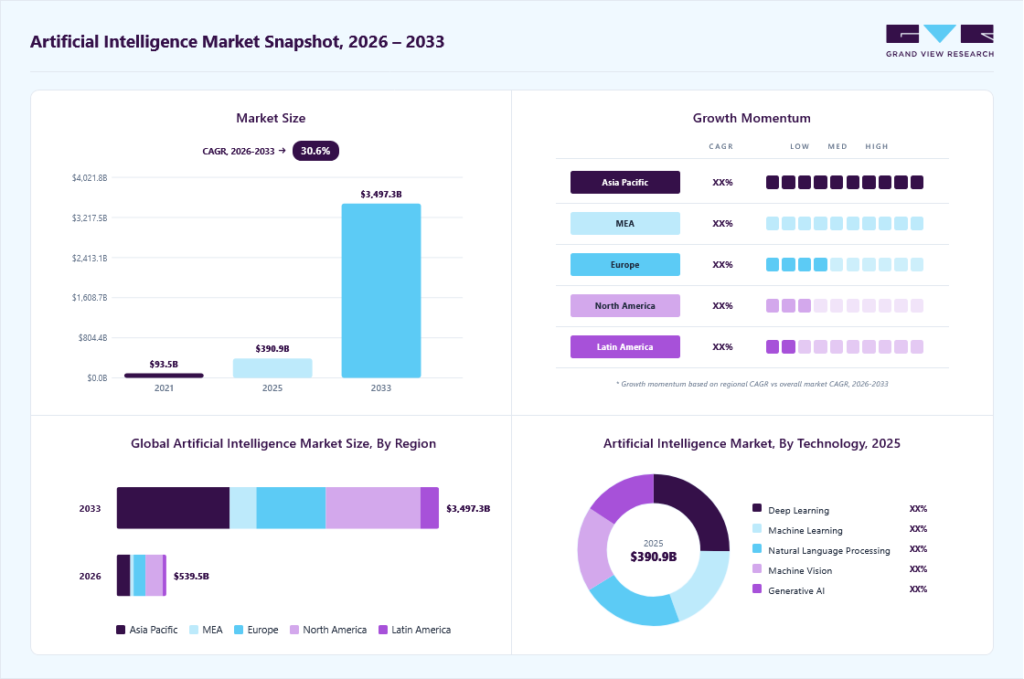
3. Make Smarter Technology Investments That Deliver Real Value
Credit: grandviewresearch.com
Let’s talk about money.
Technology can become expensive very quickly. New platforms. Monthly subscriptions. System upgrades. Employee training. The costs add up. But here’s a question worth asking: Is every investment helping your business?
That’s where IT strategy consultancy brings valuable perspective. Experienced consultants assess your existing tools before recommending new ones.
They look for:
- Unnecessary software subscriptions.
- Outdated systems that increase operating costs.
- Repetitive tasks that automation could simplify.
- Technology gaps that affect customers.
- Security risks that threaten business continuity.
Imagine spending thousands on a new platform when improving your current system could solve the problem. Not exactly a smart investment!
Before approving any project, ask: Will this technology save time, reduce costs, improve quality, or create measurable growth? If the answer isn’t clear, investigate further.
4. Bring Your Teams Together Instead of Working in Silos
Here’s something businesses often overlook. Technology problems aren’t always technology problems. Sometimes, they’re communication problems! Your IT department might prioritize system performance. Your sales team wants faster customer information. Meanwhile, leadership focuses on revenue. Everyone works hard. But are they working toward the same outcome? Strong strategy consulting connects these priorities.
The three C’s of successful collaboration:
- a) Communication: Encourage IT teams and business leaders to discuss goals regularly.
- b) Collaboration: Involve employees when choosing tools and redesigning processes.
- c) Clarity: Give every project a clear purpose, owner, and success measure.
When people understand why changes matter, they can make better decisions together. Because sometimes, better technology starts with better conversations!
5. Align Technology With Transformation Goals Without Creating Chaos
Digital transformation sounds exciting.
Until employees face five new tools, three unfamiliar systems, and endless training sessions! Sound familiar? Successful transformation isn’t about changing everything overnight. It’s about making the right changes in the right order. So, how to align technology with transformation goals without overwhelming your organization?
Try this approach:
- Identify the outcome: Decide what the transformation should achieve.
- Review current capabilities: Understand what your systems and employees can handle.
- Prioritize improvements: Start with changes that offer meaningful value.
- Prepare employees: Provide training, guidance, and practical support.
- Track adoption: Check whether people actually use the new tools.
For example, if your company wants faster operations, begin by improving one time-consuming workflow.
Measure the results. Then expand what works. This approach reduces unnecessary disruption and makes change easier to manage. Remember, transformation works best when people move forward with the technology.
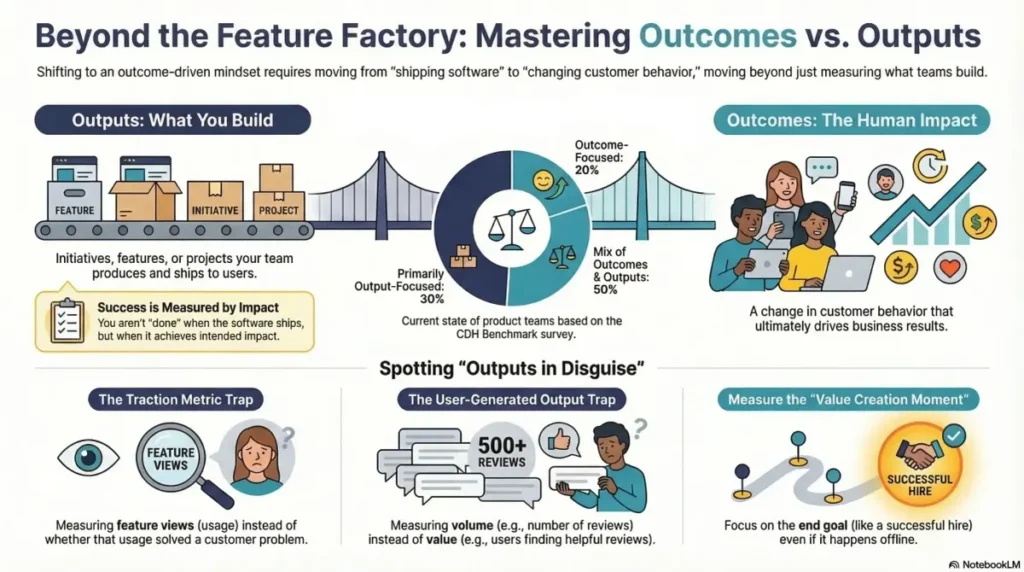
6. Measure Business Results, Not Just Technical Performance
Credit: producttalk.org
Let’s say your company launches a new digital platform. The system works perfectly. Great news! But did it actually improve your business? That’s the question that matters. A successful IT strategy consulting approach connects technical performance with business outcomes.
Instead of measuring only system uptime, track results such as:
|
Business goal |
What to measure |
|
Improve customer service |
Response time and satisfaction |
|
Reduce operating costs |
Savings and process efficiency |
|
Increase productivity |
Time saved on repetitive tasks |
|
Support business growth |
System capacity and delivery speed |
|
Improve reliability |
Downtime and recovery time |
These measures help leaders understand whether their investments deliver value. Review them regularly. If something isn’t working, adjust your approach. Because a successful strategy shouldn’t sit untouched in a folder!
It should evolve as your business grows.
Strategy Consulting vs. Managed IT Support: What’s the Difference?
Here’s a common question. Isn’t technology consulting the same as managed IT support? Not quite. Managed IT services often focus on maintaining systems, resolving technical issues, and keeping daily operations running. Strategy consulting focuses on the bigger picture.
It asks where your business is going and which technology decisions will help you get there.
Think about it this way:
- Managed support: Keeps your existing systems working.
- Strategic consulting: Helps you decide which systems you need and why.
- Transformation consulting: Helps your organization adopt meaningful changes.
All three can work together. But they serve different purposes.
Whether you’re reviewing Mindcore or other consulting firms in Newark, New Jersey, don’t compare providers on technical support alone. Ask whether their solutions match your business priorities. A company searching for “Newark New Jersey consulting services” should evaluate experience, communication, project scope, and measurable outcomes before choosing an expert.
The best partner helps you make informed decisions, not simply purchase more technology.
How TheWhysCounselor Helps Turn Technology Into Business Progress

Credit: optibiz.co.ke
Here’s what I believe makes consulting valuable. It’s not the number of tools a consultant recommends. It’s the quality of the questions they ask first.
At TheWhysCounselor, the approach starts with understanding the challenges behind your business decisions.
The focus includes:
- Business strategy: Identify priorities and create a clearer direction.
- Technology transformation: Connect digital investments with business needs.
- Process improvement: Simplify operations and reduce friction.
- Leadership development: Help teams manage change and work together.
- Execution support: Turn recommendations into practical next steps.
Rather than treating every problem as a software issue, this approach examines people, processes, and technology together.
Explore TheWhysCounselor’s business consulting services to see how these capabilities can support your organization’s goals.
Because lasting progress often starts with one smart decision!
Your IT Alignment Checklist: Are You Moving in the Right Direction?
Before your next technology investment, ask yourself five questions:
- i. Purpose: Does this investment solve a clear business problem?
- ii. People: Have employees shared their needs and challenges?
- iii. Priorities: Does the project support our most important goals?
- iv. Performance: Can we measure its business impact?
- v. Progress: Do we have a realistic plan for improvement?
If several answers remain unclear, your business may need a stronger technology roadmap. And that’s perfectly manageable. Start with the biggest gap. Build from there.
The Bottom Line
Summing up, your business doesn’t need technology for the sake of technology. It needs tools, processes, and people working toward the same destination. That’s exactly what IT strategy consulting helps you achieve. It connects business priorities with practical decisions. It improves collaboration, guides investments, and creates a clearer path toward measurable progress. Most importantly, it helps you stop asking, “Which technology should we buy next?”
Instead, you start asking, “What does our business actually need to succeed?”
And that’s where meaningful transformation begins! Ready to connect your business goals with smarter technology decisions?
FAQ’s
Still have questions? Here’s a quick look at the most frequently asked questions about IT strategy consulting and how it helps businesses grow.
What is IT strategy consulting?
It helps businesses plan technology investments, improve operations, and connect IT decisions with business goals.
How does IT strategy support business growth?
It improves efficiency, reduces unnecessary costs, and helps companies choose technology that supports expansion.
What is the main goal of IT-business alignment?
The goal is to ensure every important technology decision supports measurable business objectives.
How often should a business review its IT strategy?
Review it at least annually and whenever major business, market, or technology changes occur.
Can small businesses benefit from IT strategy consulting?
Yes! Small businesses can use it to prioritize investments, improve security, simplify workflows, and plan for growth.
Leave a Reply